
Precision and Efficiency in Manufacturing
Sheet Metal Welding
Our guide to sheet metal welding: All the information, processes, and special considerations related to sheet metal fabrication. Read it now!
1,500
Satisfied Customers
5,500
Available Machines
0.11%
Complaint Rate







Joining Processes
Sheet Metal Welding
As a leading digital manufacturer in the metalworking industry, sheet metal welding is one of our most common jobs. This joining process offers a variety of options for fabrication.
But which welding method is best suited for sheet metal—and perhaps even for beginners? Get ready for a brief introductory course on welding with helpful tips, straight from the experts.

Reliable Quality
The Basics of Sheet Metal Fabrication
The term “sheet metal” refers to a flat, folded workpiece. When asked which metals can be processed into sheet metal, the answer is simple at first glance: in principle, any metal.
The choice of welding method depends, among other factors, on the sheet metal thickness. Some methods are characterized by high heat input. This could cause a thin sheet of metal to burn through unintentionally.

What are the different welding methods for sheet metal?
The following welding methods are available for welding sheet metal:
- MAG Welding
- MIG Welding
- TIG welding
- Autogenous Welding
- Manual Arc Welding
- Spot Resistance Welding
Addendum:
In oxy-fuel welding, also known as gas fusion welding, heat control is very easy to manage. Gas shielded welding ensures an extremely precise and clean weld bead, which is often difficult to achieve with electrode or manual arc welding. Given these factors, the various methods within gas shielded welding—which represent the most advanced form of sheet metal processing—are best suited for welding and, where appropriate, also serve as an ideal introduction to sheet metal welding for experienced amateurs.
The Methods in Detail
Let’s take a closer look at some of the most common types of sheet metal welding and what sets them apart from one another:
Get a quote for your parts
We will send you a suitable offer within 48 hours
All 4 welding processes
The Methods in Detail
Autogenous Welding (Gas Fusion Welding)
Gas fusion welding is one of the oldest methods, but it is still used from time to time in certain situations today. Instead of electricity, this method uses fuel gases. For oxy-fuel welding, in addition to the welding torch, you’ll need a fuel gas cylinder and an oxygen cylinder, both equipped with pressure-reducing valves that include check valves. In this process, the sheet metal is melted by applying controlled heat. A welding wire is not required but can be used for support.
Manual Arc Welding
In manual arc welding, the arc burns between the workpiece and the electrode. During the welding process, gases are released as the electrode and its coating melt, resulting in the formation of slag. The gases formed act as a protective shield, much like shielding gases. On the other hand, the cooled slag traps impurities and, by reducing surface tension, helps prevent the workpiece from warping during the process.
TIG welding
In tungsten inert gas (TIG) welding, a shielding gas is used during the welding process. In most cases, an inert gas such as argon or helium is used. The gas ensures that neither the electrode nor the molten weld pool can become enriched with oxygen. If you wish to use a filler material, you must add it directly to the molten weld pool. Sheets welded using the TIG process generally exhibit excellent quality and a clean weld bead. Within TIG welding, there are various subtypes, such as hot-wire and cold-wire welding or the ArcTic process.
MIG/MAG Welding
Metal-inert gas welding (MIG) and metal-shielded gas welding are both equally popular welding processes. The main difference between the two welding methods is simply the type of shielding gas used. While MIG and TIG welding both use an inert gas, MAG welding uses an active gas. In this case, the active gas reacts with the molten pool, whereas the inert gas does not.
The reason we list the two processes—MIG and MAG welding—together is that they are often pronounced as a single compound word because they are so similar. Both types of sheet metal welding can be performed mechanically. It is generally much easier, faster, and more precise to work using a computer-aided process.
Special Caution Required
Here’s what you need to keep in mind when welding galvanized sheet metal
Galvanizing metal and steel is used to protect them from corrosion. Galvanizing can be performed using the following methods:
- Hot-dip galvanizing
- Hot-dip galvanizing
- Mechanical Galvanizing
- Sheradization
The various processes differ, in some cases significantly, in terms of their final coating thickness, durability, and load-bearing capacity.

In theory, galvanized sheet metal can be welded. However, each case should always be evaluated on its own merits, because, first of all, it poses health risks. The fumes produced when welding galvanized sheet metal result in high levels of pollution. It contains high levels of zinc oxide from the coating, as confirmed by the North Rhine-Westphalia Occupational Safety and Health Authority, among others. Therefore, special safety measures must be strictly observed. Second, there is a broad set of regulations regarding galvanized coatings that must be followed.
Here are a few tips and things to keep in mind:
Remove the zinc coating
Due to the risk of corrosion alone, it is important to completely remove the existing zinc coating by sanding it down before welding the sheet metal. Be sure to protect adjacent areas from iron-containing dust.
Restore the zinc coating
The regulations here are strict: DIN 50976 specifies exactly what degree of conformity, corrosion protection rating, and minimum coating thickness the new zinc coating must have. As a general rule, the coating must be the same thickness as the original; verification tests must be conducted if necessary.
According to the regulations, simply applying a zinc spray coating as the sole form of protection is not permitted. A combination of zinc spray and paste would be the better solution in this case; the spray must contain 92–95% zinc. Be sure to review the exact specifications again.
Load-bearing capacity and load-bearing components
The idea of welding load-bearing components that have been galvanized is not a good one. There is far too high a risk of corrosion and, consequently, a reduction in load-bearing capacity. Therefore, welding galvanized components is officially prohibited.
However, even for non-load-bearing components, it is essential to always check the load-bearing capacity of the weld. Weld cracking is not uncommon, especially with conventional welding methods. If you want to play it safe, hire a professional service provider with access to fully safe CNC welding processes—such as CNC24—to weld your sheet metal parts. With CNC24, you’ll receive a test certificate free of charge with every delivery, so you won’t take any risks.
Experience you can build on
The CNC24 team combines over 30 years of experience in the production of precision components
500+
Finished
5.500+
Machines
80.000
Machine hours / Day
22
Countries
1.500+
Customers
6.000+
Orders
500.000
Individual parts
30 years
Manufacturing experience
Professional Expertise
Have a professional weld your sheet metal now
When it comes to sheet metal fabrication through welding, there are numerous methods to choose from. Those seeking a welding technique that is both robust and visually precise are best served by TIG, MIG, and MAG welding. These methods are extremely flexible and, when combined with computer-aided processes, are also unbeatably fast. In addition to metal, other materials can also be processed. If computer-aided support is not available, mechanical welding can also be used.
Are you looking to outsource your production? Then we are your partner. As a professional Industry 4.0 digital manufacturer, we offer not only modern welding processes but also the full range of modern CNC manufacturing processes —all under one roof. Excellent customer service is a top priority for us, which is why our portfolio also includes custom solutions and specialized services, such as the production of complex precision components. With over 500 hand-selected manufacturers from Europe and around the world, we can deliver what you need by the agreed-upon deadline. And when time is of the essence, we also offer express manufacturing within 72 hours of receiving your order.
Like what you’re reading? Then feel free to contact us today. We’ll send you a quote tailored to your project within 48 hours.

Get a quote for your parts
We will send you a suitable offer within 48 hours
Your partner for all components
Other manufacturing processes
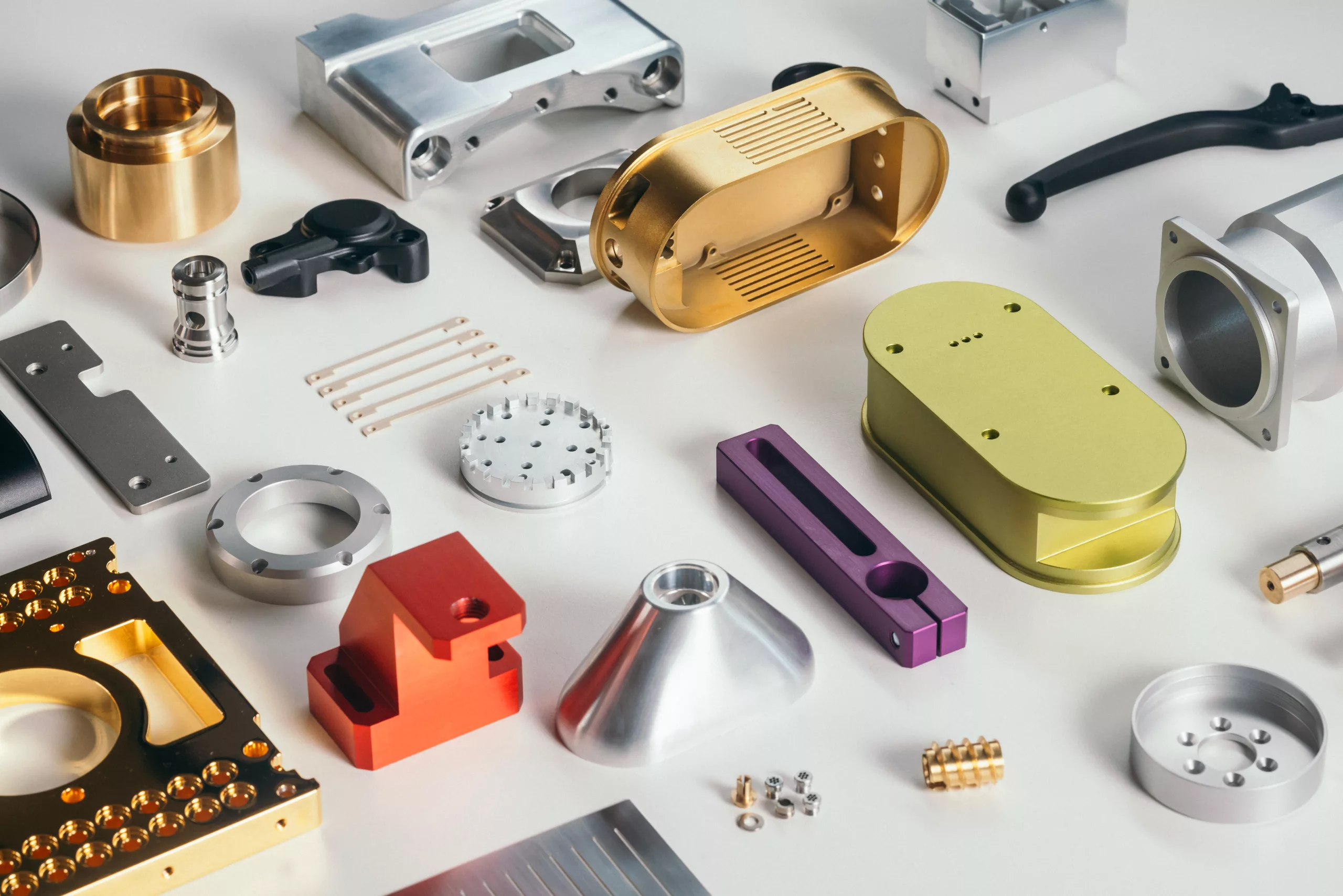
What we produce
Our sample components
CNC24
The easiest way to order components